

Window Security Film in Odessa: Which One to Choose, How Much It Costs, and What People Who’ve Already Installed It Say
Why This Has Become a Massive Demand in Odesa
Over recent seasons, shelling targeting coastal and port infrastructure has repeatedly affected residential blocks and office buildings across various parts of the city—from Prymorskyi to Chornomorske Kozatstvo. Businesses and private owners face a pragmatic task: rather than waiting for major facade repairs, they need to quickly minimize the risk of injury from shattered glass and keep openings sealed until full restoration is possible.
Film wins out here for two reasons. It can be installed in a single day without dismantling the window, and it costs a fraction of full glazing replacement. Consequently, requests come not only from private apartments but also from offices, shops, and cafes—anywhere keeping operations running is critical.

What Safety Film Is and How It Works
«Armor film» is a market-adopted term rather than a guarantee of complete bulletproofness. In essence, it is a multi-layered polyester (PET) film with an adhesive layer: it is applied to the interior side of the glass, holding fragments together when the glass shatters due to a blast wave, accidental impact, a falling branch, or construction debris. The glass may crack or fracture, but the shards remain bound to the film as a single sheet rather than scattering across the room.
«People sometimes come in expecting the film to protect a window from a shell—that is not the case, and I always warn about this during measurements,» explains Illia Kaprishanskyi. «The film’s purpose is different: to prevent broken glass from scattering across the room and injuring people. That is the difference between «the window will withstand a direct hit» and «shards won’t reach a person»—the latter is what film genuinely achieves, while the former is something no film on the market can do.»
Types of Protective Films and Their Characteristics
Several types of films are installed on properties in Odesa and the surrounding region, and confusing them should be avoided—each serves a distinct purpose.
| Film Type | Thickness, µm | Light Transmission | Primary Protection | Most Common Application |
|---|---|---|---|---|
| Tinted (Solar Control) | 50–100 | 15–50% | UV radiation, indoor overheating | Offices and apartments on sunny aspects |
| Energy-Saving | 50–80 | up to 80% | Heat loss in winter, overheating in summer | Year-round thermal glazing insulation |
| Transparent Anti-Shatter | 100–200 | up to 90% | Containing shards upon glass breakage | Homes, offices, shops in shelling-risk zones |
| Anti-Vandal (Multi-layer) | 300–400 | 80–88% | Enhanced impact resistance, break-in deterrence | Ground floors, storefronts, high-risk facilities |
For the objective of «protecting against the aftermath of shelling,» anti-shatter film starting from 100 µm is the right choice—it is sufficiently transparent and does not distort the outdoor view while retaining glass shards. Anti-vandal films are thicker and more expensive, typically chosen where defense against break-in attempts is also required, such as storefronts, warehouses, and ground floors.
Clients frequently confuse tinted and protective films because visually both darken the glass. The difference is fundamental: tinting works toward comfort—reducing sun and UV rays—while anti-shatter film focuses on safety during glass destruction. Both effects can be combined in a single sheet, but it represents a separate line item in the price list rather than a free bonus to standard tinting, which is something worth asking about directly during the ordering process.

Delivery and Installation of Film-Coated Windows Directly to the Site
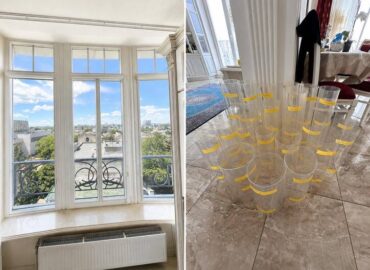
A separate option that not everyone is aware of: OKNODOM can organize not only applying film to already installed windows but also delivering and installing prefabricated windows and double-glazed units equipped with anti-impact and anti-shatter film directly to the site. This is convenient for offices, warehouses, and shops featuring numerous identical openings: instead of applying film on-site window by window, you can order double-glazed units with the protective layer pre-applied under factory conditions and receive them via turnkey installation.
«On sites with forty or fifty windows, this is faster and often more cost-effective—we bring ready-made units and install them with a crew, avoiding dragged-out on-site film application over several days,» says Illia Kaprishanskyi. «Which option is better—film on existing glass or new double-glazed units with pre-applied film—is decided during measurements, depending on the condition of the windows on-site.»
How to Choose a Film: What to Look For
When selecting a contractor and material, four key aspects should be verified. Thickness in microns—the installer must state a specific figure rather than brushing it off with «it’s a heavy-duty film.» The type of adhesive layer—quality film is applied via a wet method using a soapy solution, which allows precise positioning of the sheet without bubbles or wrinkles. Written warranties for the work, rather than verbal promises. And compatibility with the double-glazed unit: on single- and double-chamber units, film is applied to the inner pane, making it crucial for the installer to check the window’s design in advance to prevent peeling caused by chamber condensation.
Additionally, it is worth asking whether the company works with real properties and has before-and-after photos—the topic of «shelling protection» has attracted many casual operators over the past year, making this the first quality filter. The second filter is whether the installer can accurately calculate surface areas and offer a cheaper alternative where justified, such as leaving blank technical windows unfilmed if the budget is tight, rather than selling the maximum package across the board. This exact approach is what clients highlight in reviews with phrases like «they accommodate you and offer the most advantageous setup.»

Caring for Film-Coated Windows After Installation
The film requires no special maintenance, but a few rules help extend its service life. Clean the glass using a soft sponge or microfiber cloth with a neutral cleanser—avoiding abrasive powders and harsh scrapers that can scratch the protective layer. For the first two weeks following installation, avoid touching the glass entirely to let the adhesive layer cure fully. If minor peeling appears along the edge of the film over time, it can be repaired locally without re-applying the entire sheet while the warranty remains active.
The Film Installation Process
Installation takes a single day for a medium-sized project. First, the glass is thoroughly cleaned of dust, smudges, and old stickers—any debris trapped under the film will become a visible defect. Next, the sheet is cut precisely to the size of each double-glazed unit with a small tolerance. The glass and the back of the film are moistened with a soapy solution, the sheet is applied, and it is smoothed out using a rubber squeegee from the center toward the edges to push out air and excess moisture. Finally, the perimeter edges along the frame are trimmed.
You can watch how this looks in practice—from glass preparation to final edge trimming—in this safety film window installation video.
Following installation, the film requires 7 to 14 days for the adhesive layer to dry completely: during this period, windows should not be cleaned with aggressive chemicals, nor should the glass be scrubbed with the abrasive side of a sponge. This is a standard requirement for any window film, and a conscientious installer will warn you about it immediately.
Real-World Example: How Much Safety Film Installation Costs in Odesa
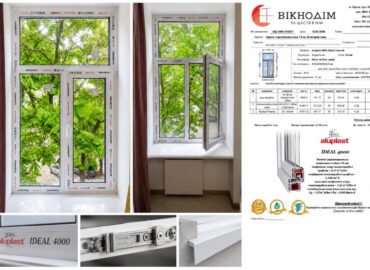
A recent OKNODOM order for a property in the same Chornomorske Kozatstvo district mentioned by the reviewer provides clear figures. According to the work order, the glazing area totaled 51 windows across five standard sizes—ranging from 665×510 to 767×635 mm, with a total film surface area of 36.1 m² and an actual application area of 32.3 m².
Materials cost 26,895 UAH (approximately 745 UAH per m²). Installation labor cost 21,156 UAH (approximately 655 UAH per m² including application across all 51 windows). Total turnkey cost: 48,051 UAH for the project. The difference between the purchased film area and the actual applied area is standard practice, as some material goes into trimming for non-standard window dimensions.
This serves as a benchmark rather than a fixed price list: final costs depend on window count, shape (fixed or operable), presence of imposts, site access, and the selected film thickness. Precise calculations are provided through a free measurement. According to Illia Kaprishanskyi, speed is often the decisive factor for businesses: «An office downtime is more expensive than film application, which is why we typically go from request to installation within one to two days—time is spent on measuring and preparing materials to exact window dimensions.»

Related Services If the Window Is Already Damaged
Film helps retain shards, but if the glass has already cracked, clouded, or lost its double-glazed unit seal, film alone won’t solve the issue. For such cases, OKNODOM offers dedicated services: PVC window and door repair and adjustment and double-glazed unit replacement. Custom glass cutting and sales, as well as detailed information on armored and soundproofing double-glazed units and recovering housing after wartime destruction (the eVidnovlennya program), can currently be found in the Russian-language section of the website—glass sales, armored and soundproofing double-glazed units, and windows during post-war housing restoration.
More details on tinted and energy-saving films are available on the OKNODOM window tinting page.
Frequently Asked Questions
How much does window safety film cost in Odesa?
Based on recent OKNODOM orders, materials cost roughly 700–750 UAH/m², while installation starts from 650 UAH/m². The final price depends on glazing area, window quantity, and configuration—an exact figure is provided via a free measurement.
Does the film protect against fragments during shelling or explosions?
The film keeps shattered glass fragments bound to the sheet, reducing the risk of injury from flying shards, but it does not replace bulletproof glass or stop a direct hit. It is a secondary injury mitigation measure, not armored defense.
Can I order windows with pre-applied film on the double-glazed unit?
Yes, OKNODOM can manufacture and deliver double-glazed units with pre-applied protective film and install them on-site—this is faster than on-site application for locations with many windows.
Can film be applied to old wooden windows?
Yes, provided the glass is intact and crack-free. On wooden frames, checking the condition of glazing beads and the sash seal beforehand is essential; otherwise, the film may adhere poorly.
How long does protective window film last?
When correctly installed and maintained, it lasts from 7 to 10 years without losing transparency or adhesion, provided abrasive cleaners are not used when washing the glass.
What should I do if the glass has already cracked—apply film or replace the double-glazed unit?
If the crack is through-going or the double-glazed unit’s hermetic seal is broken, film will not solve heat loss or fogging issues—a double-glazed unit replacement is required. Film can then be applied to the new glass.
Conclusion
Safety film is a quick and affordable solution compared to full window replacement, genuinely lowering the risk of injuries from broken glass and keeping properties protected until capital glazing repairs can be performed. If you have an office, shop, or apartment in a high-risk area, you can calculate the cost of film application or ready-made filmed window delivery for your property following a free measurement by OKNODOM.
0800 331 030 · 096 533 34 30 · Viber 097 033 05 65