REHAU Euro 70 Windows After the Shelling: How Apartments and the Building Entrance on Akademichna Street Were Restored With Support From the UN and “eVidnovlennia”
In short: Following the shelling of a residential building on Akademichna Street in Odesa, window replacements were required not only in individual apartments but also in common areas—specifically, the stairwells spanning from the first to the ninth floor. The work was carried out under the eVidnovlennya program, while the hallway repairs were made possible through additional support from international foundations. Under national regulations, individual apartment compensation cannot be secured until a building’s common areas are fully restored. The installation utilized REHAU Euro 70 profiles equipped with energy-saving double-glazed units made of toughened glass. The project was executed by VIKNODIM (OKNODOM).
My name is Illia Kaprishanskyi, and I am the chief sales manager at VIKNODIM (OKNODOM) in Odesa. This case differs from most of our stories: usually, we focus on a single apartment, whereas this project involved an entire building. Following the shelling on Akademichna, both residents’ apartments and stairwells were damaged, and some of the hallway windows were still original wooden structures dating back to Soviet construction. Here is a breakdown of how such a large-scale project operates—from the eVidnovlennya program and the role of international foundations to the REHAU Euro 70 profile and the double-glazed unit formula visible right on the finished product’s label.
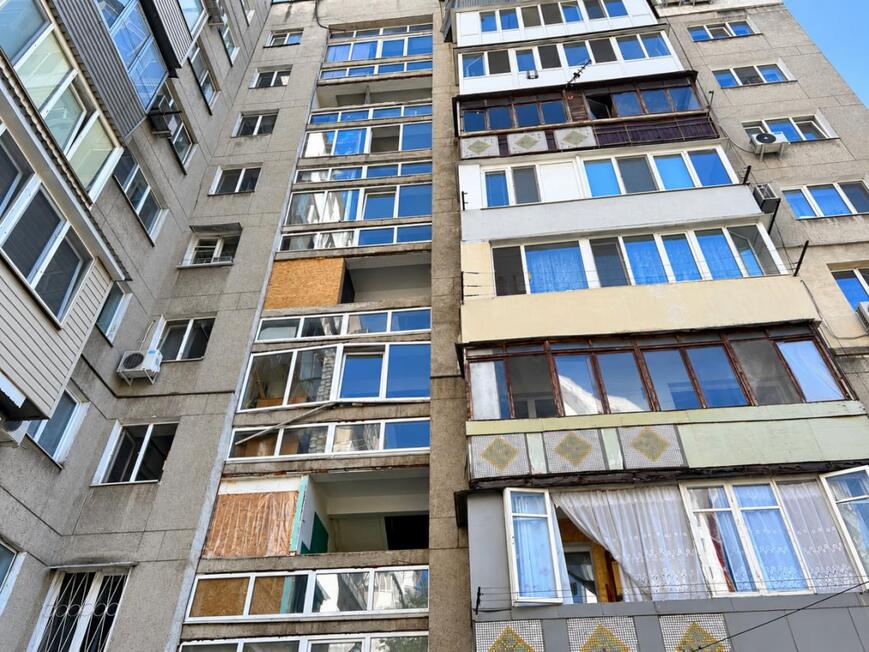
What Happened: Shelling on Akademichna Street
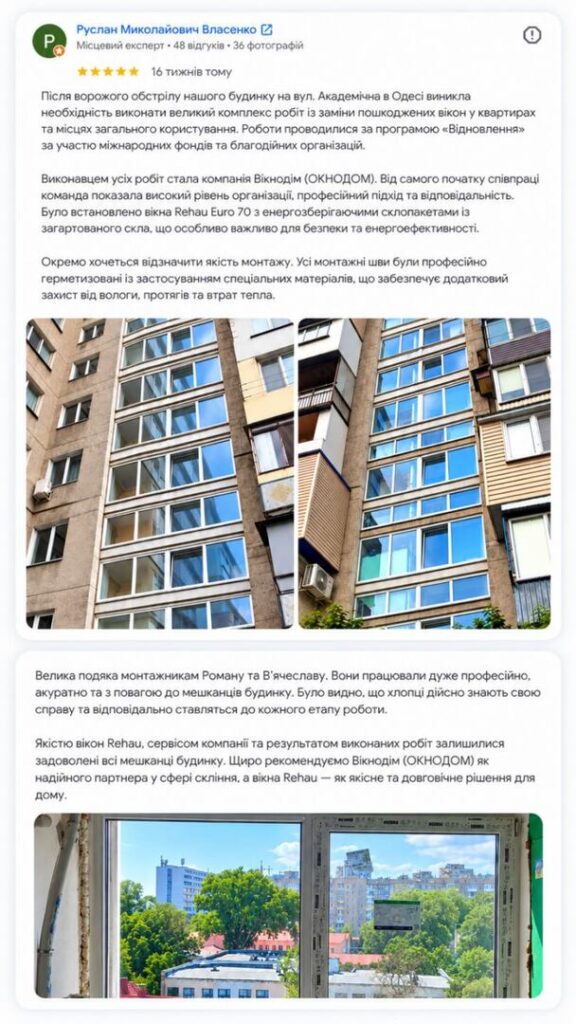
A resident of the building who left a Google review (a local guide with 48 reviews and 36 photos, meaning an evaluation you can trust) described the situation as follows:
«Following the enemy shelling of our building on Akademichna St. in Odesa, it became necessary to carry out a comprehensive set of works to replace damaged windows in apartments and common areas. The work was carried out under the eVidnovlennya program with the participation of international foundations and charitable organizations.»
The phrase “apartments and common areas” is key here. Most articles about window compensation focus solely on individual apartments—much like our previous case in Arcadia. However, shelling rarely impacts just one apartment: an entire hallway suffers, and stairwell windows are typically the oldest structures in a building, often still wooden.
Why Repairing Only Apartments Was Not an Option
This is the detail omitted by almost all online coverage of eVidnovlennya: a homeowner cannot receive compensation for their own apartment until the common areas of the entire building have been restored. This rule exists because a compromised or unsealed hallway poses a risk to all residents, not just those whose windows were blown out.
This is where international organizations step in. For example, UNHCR (The UN Refugee Agency) has repaired common areas—roofs, stairwells, hallways, and windows—in over a hundred multi-apartment buildings across Ukraine since 2023. This has allowed more than 7,500 families to access state eVidnovlennya compensation that was previously blocked due to unrepaired common spaces. In 2025 alone, approximately 1,700 families across five regions gained the right to compensation through this mechanism. The program is supported by Denmark, the European Union, Germany, Japan, Norway, Sweden, Switzerland, the United Kingdom, and the United States.
We do not claim that this specific organization funded the repairs on Akademichna—the resident’s review speaks generally of “the participation of international foundations and charitable organizations” without naming names. However, the mechanism in Ukraine currently operates precisely this way: no hallway repair means no apartment compensation, and international foundations bridge this gap where HOAs (OSBB) or residents cannot manage it independently.
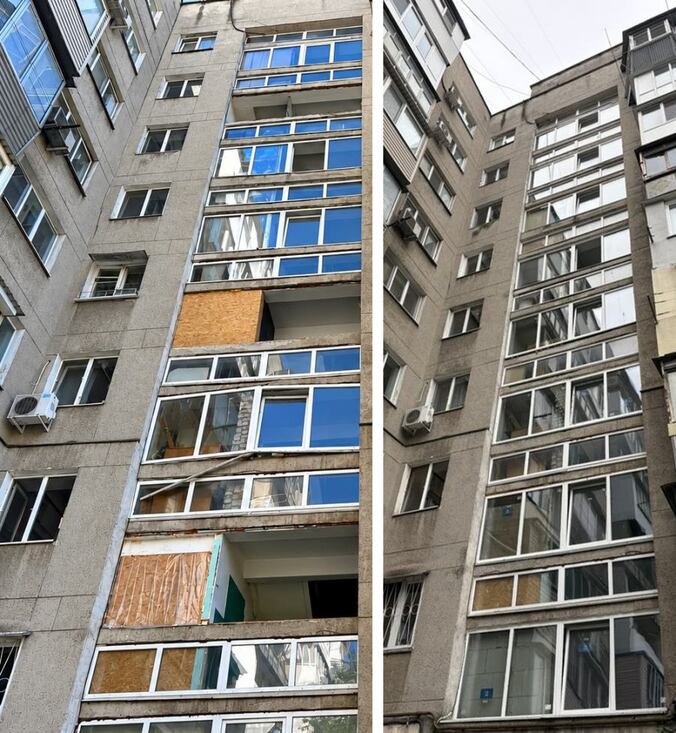
Where to Turn: UNHCR and UNICEF Contact Directory
We are frequently asked this exact question: if a building is damaged and residents cannot afford communal repairs on their own, who should they call and write to? We reviewed official UN and UNICEF websites, including their Ukrainian-language sections, to compile verified information without speculation where the organizations do not explicitly mention windows.
UNHCR: Repair of Common Building Areas. This follows the mechanism described above—the agency directly repairs roofs, hallways, stairwells, and windows in common areas of damaged multi-apartment buildings, working alongside local authorities and HOAs. HOAs, management companies, or residents can report the need for such repairs:
| UNHCR Contact | Details |
| Hotline | 0 800 307 711 (Mon–Fri, 09:00–18:00, toll-free) |
| office@unhcr.org.ua | |
| Data Collection Points | Across all regions of Ukraine; addresses are available on the interactive map at help.unhcr.org/ukraine |
| Telegram | Regional UNHCR channels for each oblast |
UNHCR: One-Time Cash Assistance. Alongside building repairs, UNHCR provides separate one-time cash assistance to shell-shocked victims and IDPs—not to be confused with specific window compensation. These funds are not tied to a specific type of repair, so some recipients use them for housing restoration. As of April 1, 2026, eligible groups include: recently evacuated IDPs who left their homes less than 45 days ago due to threats to life, shelling, or forced evacuation (12,300 UAH per person); IDPs displaced between 46 days and 6 months ago (12,300 UAH, subject to secondary assessment); returnees who came back 3–12 months after displacement (10,800 UAH per person); and households affected by shelling less than 45 days ago (12,300 UAH per person). Applications require a passport/ID, tax ID (IPN), the household head’s IBAN bank account, children’s birth certificates, and vulnerability documents. Submissions can be made at data collection points or via the hotline.
UNICEF: Transparent Scope of Support. To be entirely transparent, we found no separate UNICEF program specifically dedicated to window replacement or glazing on either their English or Ukrainian websites. UNICEF in Ukraine operates the “Spilno” winter cash assistance program—a one-time payment of 19,400 UAH per household for families with children in front-line zones (0–20 km from the front line) across eight regions, alongside fuel briquettes, warm clothing, and heating system support. However, these funds are intended for basic needs and warmth rather than structural window repairs, and registration is handled by the Pension Fund of Ukraine, CNAPs (Administrative Service Centers), and local government bodies rather than UNICEF directly, as stated on their site. UNICEF Hotline: 0 800 600 017 (toll-free; for “Spilno” inquiries — Mon–Fri 09:00–17:00).
Southern Regional Contact: NGO “Desyta Kvitnia” (dk.od.ua). For a local, boots-on-the-ground organization in Odesa, Mykolaiv, and Kherson, the NGO “Desyta Kvitnia” operates actively. Their website explicitly outlines housing assistance programs (emergency repair kits, insulation kits, contractor-led repairs) in Odesa, Mykolaiv, and Kirovohrad regions—the exact territory where VIKNODIM operates. Crucially, this housing program is implemented “with the support of UNHCR,” as stated on their site (a UNHCR partnership rather than UNICEF):
| “Desyta Kvitnia” Contact | Details |
| Hotline | 0 800 33 28 58 (Mon–Sat, 09:00–19:00, toll-free) |
| Telegram Bot | Available 24/7, anonymous |
| Odesa Office | 15 Heroiv Krut St. |
| Required Information | Address, contact details, and type of property damage |
In short: for hallway or common area repairs, post-shelling cash assistance, or local regional contacts in Odesa, Mykolaiv, or Kherson, refer to the UNHCR and “Desyta Kvitnia” contacts above. UNICEF programs address winter and basic family needs rather than glazing replacement.
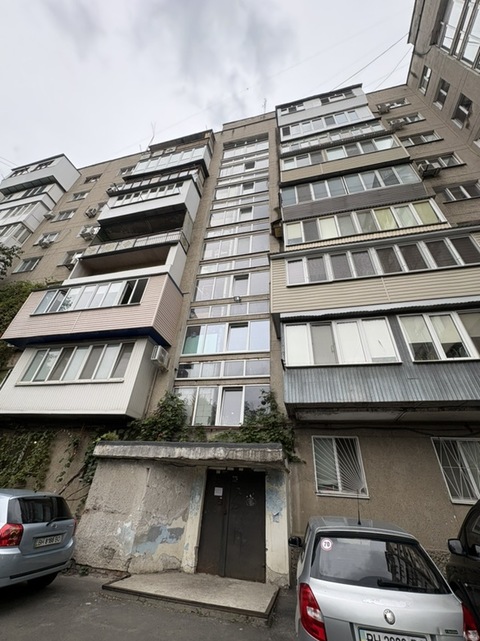
REHAU Euro 70 Profile: Why It Was Chosen for This Scale
For a single apartment in Arcadia, we installed REHAU Synego MD—a premium system featuring an additional seal contour. On Akademichna Street, where dozens of structures were required across multiple floors, the choice fell on REHAU Euro 70. It is a more versatile, cost-effective option for large-scale projects without compromising on the German profile quality we detailed in our article on German-manufactured REHAU profiles.
Euro 70 is a 5-chamber system with a 70 mm mounting depth, slightly narrower than REHAU’s premium lineups but entirely adequate for a residential building in Odesa. Further details on how various REHAU profile lines differ in chamber count and mounting depth can be found in our dedicated REHAU profile guide.
Technical Specifications: Profile and Double-Glazed Unit Formula
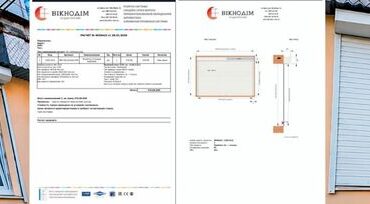
The following parameters appear in project documentation and factory labels on the finished products without rounding:
| Parameter | Specification |
| Profile System | REHAU Euro 70 |
| Mounting Depth | 70 mm |
| Number of Chambers | 5 |
| Profile Thermal Transmittance | 1.2–1.3 W/m²·K |
| Maximum Glazing Thickness | Up to 40 mm |
| Gaskets | EPDM, 2 contours |
| Sound Insulation | Up to 43 dB |
| Burglary Resistance | Up to Class 2 (ENV 1627) |
| Double-Glazed Unit Formula | 4ESG–16Ar–4ESG–16Ar–4i |
| Chamber Fill | Argon in both chambers |
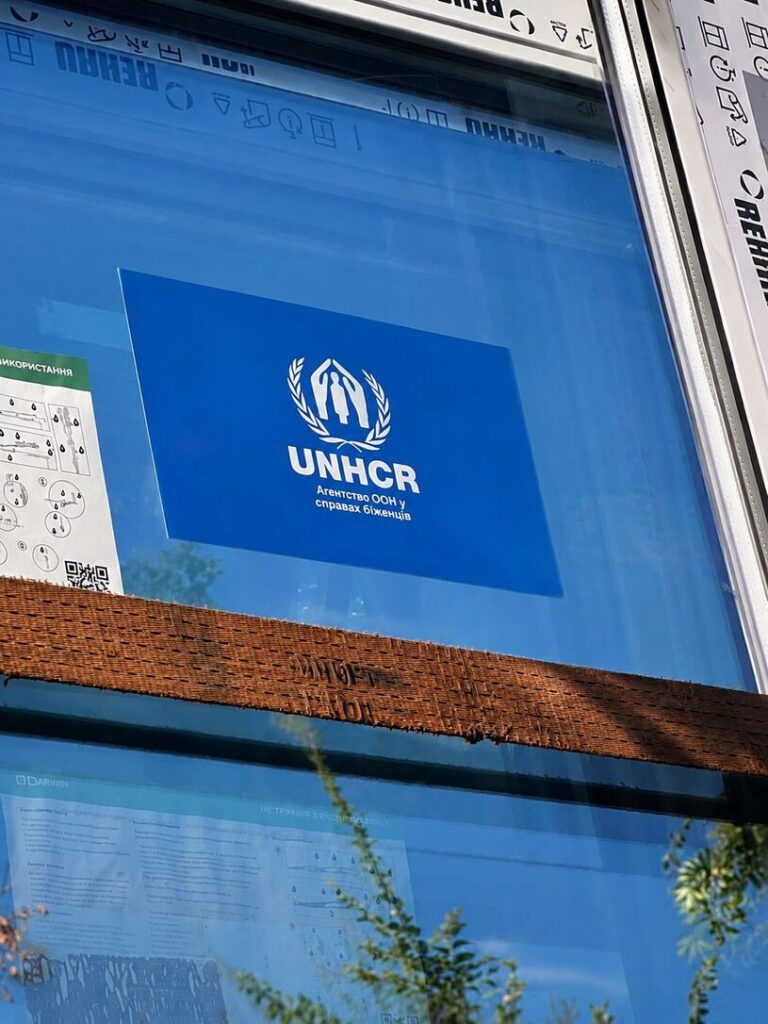
The double-glazed unit formula here is unique—not by coincidence, but as a direct response to the situation. “4ESG–16Ar–4ESG–16Ar–4i” is a dual-chamber, three-pane unit, but unlike standard glass, the letters ESG denote toughened safety glass (Einscheibensicherheitsglas per German terminology).
This distinction is critical for a building that has already experienced shelling. Standard glass shatters into large, sharp shards upon impact. Toughened glass crumbles into small, blunt granules with no sharp edges—a standard safety glazing technology applied where minimizing injury risks from secondary impacts is paramount. Breaking down the formula:
- 4 ESG — outer glass pane, 4 mm, toughened.
- 16 Ar — first chamber, 16 mm, argon-filled for superior thermal insulation.
- 4 ESG — middle glass pane, also toughened, 4 mm.
- 16 Ar — second chamber, also 16 mm, argon-filled.
- 4 i — inner glass pane, 4 mm, featuring an energy-saving low-E coating that reflects heat back into the room.
This creates a structure where two out of three panes are toughened, while the third (inner) pane handles energy conservation. This is precisely what the reviewer meant when noting the installation of “energy-saving double-glazed units made of toughened glass, which is especially important for safety and energy efficiency”—achieving both thermal retention and reduced laceration risks upon repeated impact.
Project Scope: From the First Floor to the Ninth
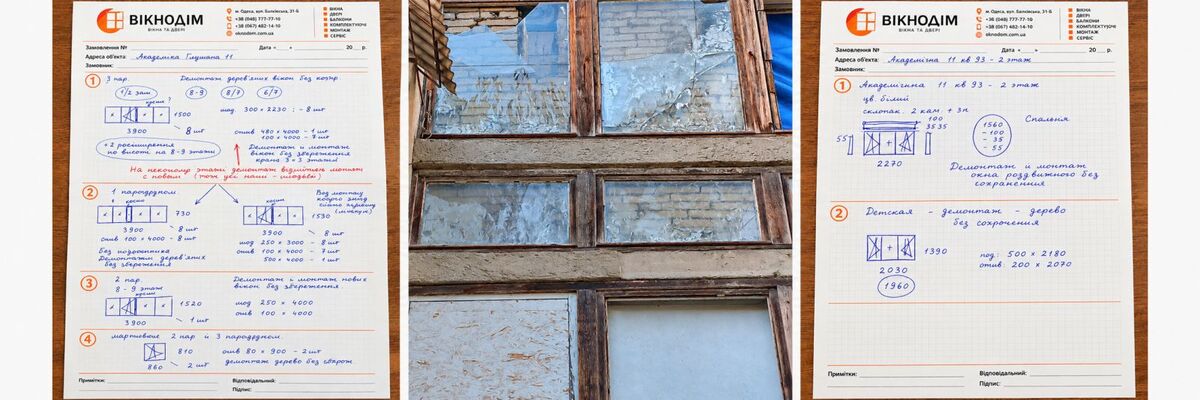
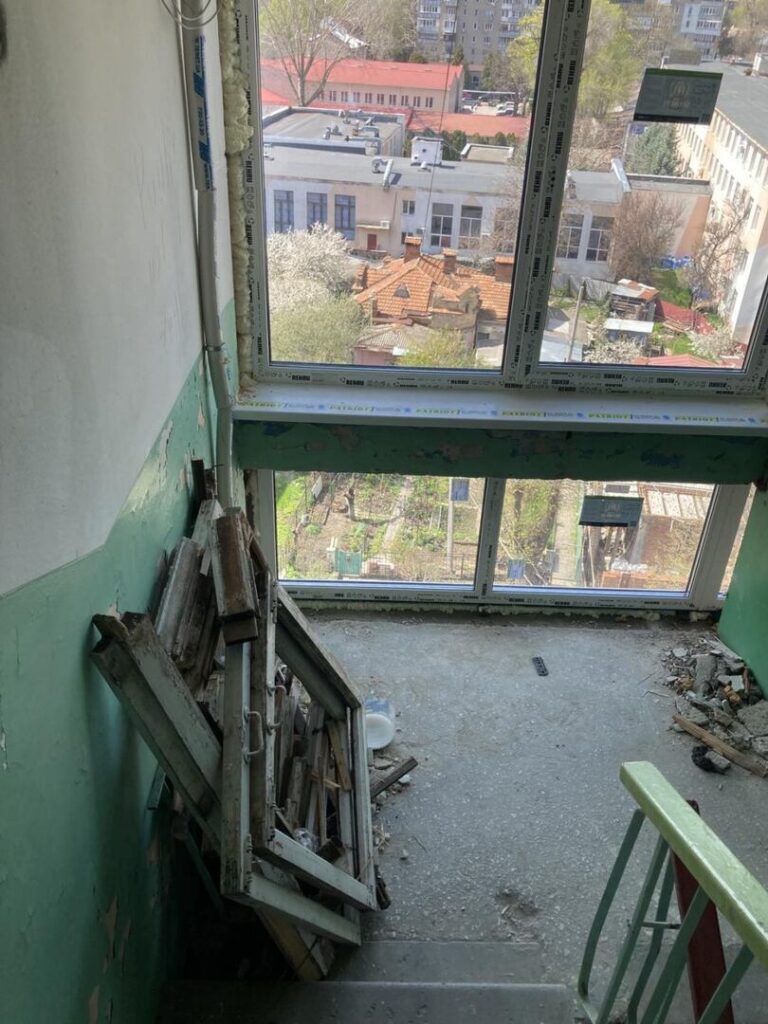
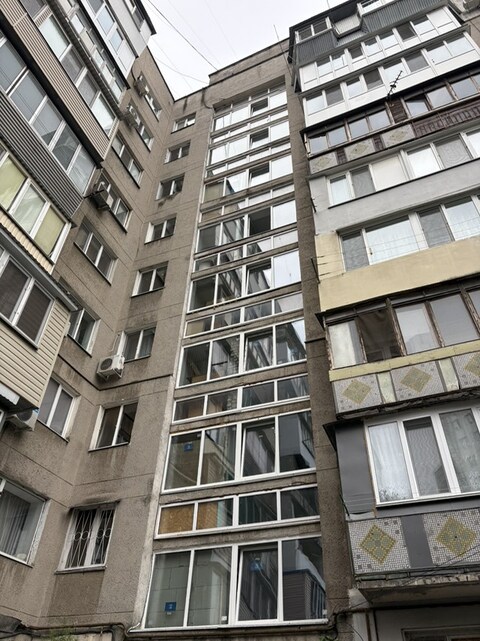
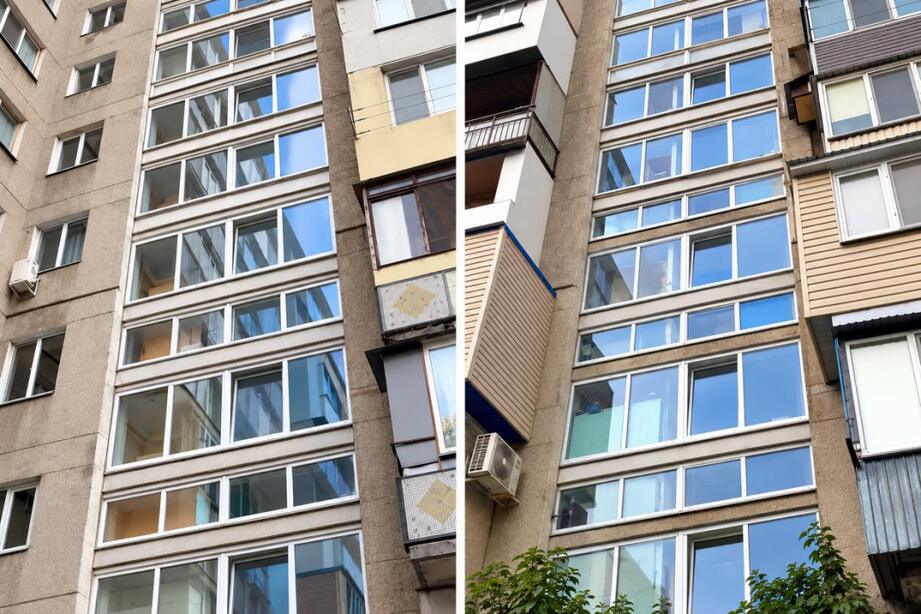
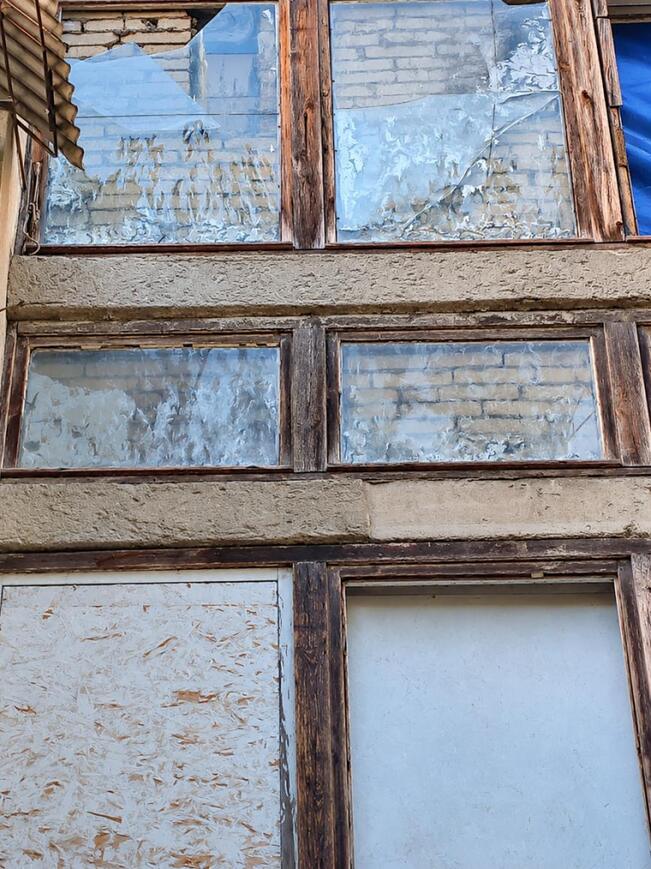
According to project measurements, the scope covered stairwell windows across multiple floors—from the first to the ninth—including spans where height regulations required custom structural extensions. Some old hallway windows were wooden (dismantled without retention), while others were previously installed lower-quality plastic windows that also required replacement. Separately, as part of the same project, a window in a child’s bedroom in a second-floor apartment was replaced.
VIKNODIM technologist Serhii Borysovych Rudy explains why such projects require a different planning approach compared to a single apartment:
«When working on a single apartment window, you coordinate everything with one owner. Here, you have a hallway where different people live on every floor—some have children at home, others work remotely. We scheduled installations floor by floor so as not to leave the building exposed on multiple levels simultaneously during cold weather. Some upper-floor openings had non-standard heights, requiring structural extensions built to custom measurements rather than standard blueprints.»
Dismantling and Installation: A Word from the Installers
Installer Roman Matiukha, who worked on the site alongside his colleague Viacheslav, details the specifics of working in a shared hallway rather than an isolated apartment:
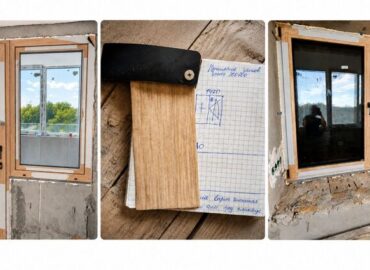
«The main difference from an apartment is that people constantly walk past you with baby strollers and bags. We set up barriers and cleaned up after completing each floor instead of leaving debris until the entire project wrapped up. Wooden frames were dismantled down to the bare brick since there was nothing worth preserving, immediately prepping the opening for new PVC structures.»
The resident explicitly confirmed this phase in their review: «I would like to separately note the quality of the installation. All mounting joints were professionally sealed using specialized materials, providing additional protection against moisture, drafts, and heat loss»—while expressing gratitude to the installers: «A huge thanks to installers Roman and Viacheslav. They worked very professionally, neatly, and with respect for the building’s residents.»
How Compensation Was Structured: eVidnovlennya Plus International Support
The mechanics for projects of this scale are slightly more complex than for a single apartment. While our page on the eVidnovlennya program outlines the baseline process for individual owners, the logic for the Akademichna building was two-tiered:
- Each apartment owner with damaged windows submitted an individual damage report via the Diia application—this process mirrors standard procedure.
- Common areas—hallways and stairwells—were handled separately. Until these structures are restored, individual resident applications cannot be approved under program rules. Consequently, hallway repairs proceeded with the participation of international foundations and charities mentioned by the reviewer.
- As contractors, we executed technical measurements, estimations, and installations for both segments of the project (private apartments and common areas), preparing all necessary reporting documentation for both tracks.
- Upon completion of work and joint sealing, the building received its completion certificate, giving residents the ability to finalize their individual compensation claims.
The key takeaway: if both your apartment and common hallway areas are damaged, resolving both issues concurrently rather than focusing solely on your private unit is essential to avoid getting stalled at the building’s common property stage.
Final Outcome
The reviewer summarized the project’s conclusion: «All building residents are satisfied with the quality of the Rehau windows, company service, and results. We sincerely recommend Viknodim (OKNODOM) as a reliable glazing partner, and Rehau windows as a quality, durable home solution.» The full review with photographs can be viewed here.
A similar approach—restoring glazing for an entire property systematically rather than piecemeal—was demonstrated in our work at Derby Style House in Odesa. To see how REHAU profiles perform years after installation rather than immediately afterward, read a client’s review sharing impressions of their REHAU windows after five years of operation.
Frequently Asked Questions
If both the apartment and the hallway are damaged, what should be restored first?
Under eVidnovlennya rules, homeowners cannot receive apartment compensation until the entire building’s common areas are restored. Therefore, repairing the hallway and stairwell windows is a prerequisite for processing resident applications.
Who pays for hallway repairs if eVidnovlennya compensates individual apartment owners?
Repairs to common areas in damaged Ukrainian buildings are frequently funded by international organizations and charitable foundations—for example, UNHCR has repaired common spaces in over a hundred buildings nationwide since 2023, clearing the path to compensation for thousands of families. Specific foundation involvement for a given building is coordinated through HOAs or management companies, and direct inquiries can be made via the UNHCR hotline at 0 800 307 711 (Mon–Fri, 09:00–18:00) or regional partners like the NGO “Desyta Kvitnia” in Odesa, Mykolaiv, and Kherson (0 800 33 28 58), which implements UNHCR-supported housing assistance.
Does UNICEF assist with window replacements?
At the time of writing, we found no dedicated UNICEF program specifically for window replacement or glazing on either international or Ukrainian UNICEF portals. UNICEF operates the “Spilno” winter cash assistance program providing one-time grants to families with children in front-line zones for basic needs, warmth, and clothing, but not for structural window repairs. UNHCR is the appropriate contact for window and hallway assistance.
Why was REHAU Euro 70 chosen for Akademichna instead of a more premium system?
For large-scale projects featuring dozens of structures across multiple floors, Euro 70 is a cost-effective choice that maintains German profile quality: a 5-chamber system with a 70 mm mounting depth sufficient for residential buildings. Premium lines like Synego MD are typically selected for individual apartments with elevated thermal insulation demands.
What does ESG mean in a double-glazed unit formula, and why is it needed?
ESG stands for toughened (safety) glass: when broken, it shatters into small, blunt granules without sharp edges instead of large shards. For a building that has already survived shelling, this minimizes injury risks upon repeat impacts—hence the review’s reference to “safety and energy efficiency” simultaneously.
How long does a large-scale project take compared to a single apartment?
Timelines depend on the number of structures and floor access schedules. Hallway projects are executed in stages, floor by floor, to avoid leaving the building exposed across multiple levels at once. This takes longer than a single apartment installation but runs concurrently with compensation processing rather than sequentially.
In Short
When shelling damages both apartments and hallways, repairs split into two parallel tracks: individual eVidnovlennya claims and common area restoration, which program rules mandate must occur first. On Akademichna, these processes were unified—backed by international foundation support for the hallway and REHAU Euro 70 profiles throughout the building.
If you face a similar situation—where both your window opening and stairwell or hallway are damaged—reach out to VIKNODIM. We conduct measurements and calculations for both individual apartments and entire buildings, navigating the practical interplay between eVidnovlennya and international foundations.