

Panoramic Window Tinting at the Rozental Residential Complex: How the Apartment Temperature Was Reduced by 5–6°C
Panoramic windows are one of the major advantages of modern residential buildings. They bring more natural light into a home, make the interior feel larger and provide an open view. In summer, however, the same architectural feature can cause an apartment to heat up continuously under direct sunlight.
This was the problem faced by the owners of an apartment at the Rozental residential complex in Lymanka, Odesa Region. Large panoramic windows and prolonged exposure to direct sunlight caused the rooms to become uncomfortably hot early in the day. The air conditioners ran almost constantly, yet they could not always offset the heat entering through the glazing.
Closing the curtains reduced glare, but it did not solve the underlying problem. Solar energy had already passed through the glass and was heating the floor, walls, furniture and other interior surfaces.
The owners contacted OKNODOM to find a solution that would reduce overheating, preserve the panoramic view and avoid replacing the existing window units.

Why the apartment was overheating
The outdoor air temperature was only part of the problem. The main heat load came from direct sunlight falling on a large glazed area for several hours each day.
Solar energy passed through the insulated glass units and heated the surfaces inside the apartment. Those surfaces then released the accumulated heat into the room. In effect, the interior became a thermal store: even after the intensity of the sun decreased, the apartment cooled down slowly.
Heavy curtains operate on the room side of the glazing. They reduce visible light, but they also absorb solar energy and transfer part of that heat to the interior. The Rozental apartment therefore needed a solution that could reduce solar gain at the glass itself.
After inspecting the windows, the OKNODOM team recommended professional panoramic window tinting with Silver R20 exterior reflective film.

Why Silver R20 exterior reflective film was selected
Silver R20 is a reflective architectural window film designed to reduce the amount of solar energy transmitted through glazing and to control excessive daylight and glare.
In daylight, the film creates a pronounced reflective appearance on the exterior. The view from inside remains considerably clearer, allowing the owners to enjoy the panoramic glazing without keeping the curtains closed throughout the day.
The project had to achieve several goals at once:
- reduce overheating in the rooms;
- lower the load on the air-conditioning system;
- control harsh daylight and glare;
- preserve the panoramic view;
- avoid the cost and disruption of replacing the glass units;
- provide additional daytime privacy from the outside.
Before choosing the film, the team assessed the orientation of the windows, the glazed area and the construction of the existing insulated glass units. Window film should never be selected solely by its shade or darkness. The glass type, number of panes, existing low-emissivity or solar-control coatings, and the intended installation surface must all be considered.

Why the insulated glass units were removed before tinting
It may appear that architectural film can simply be applied to the windows in place. With large panoramic glass units, however, the installation method must be selected for the specific glazing system.
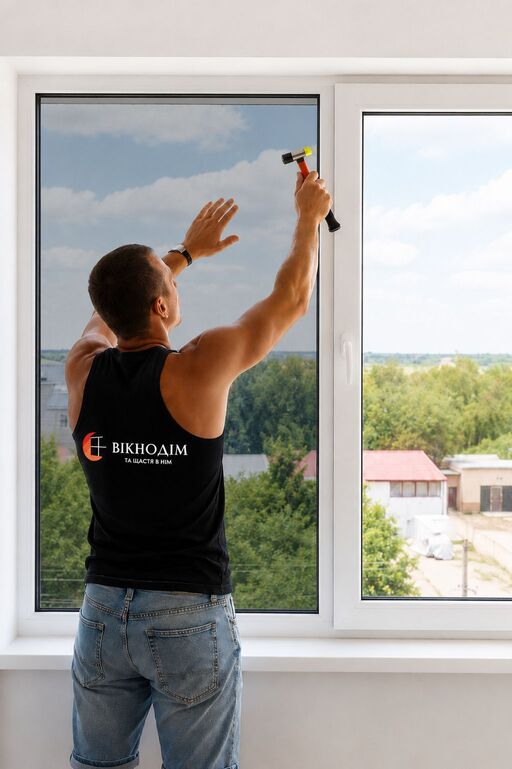
At the Rozental project, the OKNODOM specialists carefully removed the insulated glass units and transported them to the workshop. This made it possible to work under controlled conditions: clean the glass thoroughly, apply the material evenly, finish the edges correctly and inspect every surface before reinstallation.
Special attention was paid to the compatibility of the film and the glazing. If an unsuitable product or installation surface is chosen, different areas of the glass may heat unevenly. This can increase internal stress and the risk of thermal breakage, commonly referred to as thermal shock.
Exterior installation is not a universal solution for every window. Before work begins, a specialist must identify the glass-unit specification and confirm that the selected film is suitable for that particular construction.
This is why professional window tinting in Odesa and the Odesa Region starts with a technical assessment rather than with film application.
How the work was carried out
- The specialists inspected the panoramic glazing and identified the main source of solar heat gain.
- Silver R20 exterior reflective film was selected.
- The insulated glass units were removed carefully, without damaging the frames or glazing beads.
- The units were transported to the OKNODOM workshop.
- Each glass surface was prepared and thoroughly cleaned.
- The film was applied in accordance with the installation requirements.
- The finished surfaces were inspected for contamination and visible defects.
- The glass units were returned to the property and reinstalled in the window frames.
After installation, the team checked the position of the insulated glass units and the condition of all contact points. The panoramic glazing retained its original geometry, while the exterior acquired a clean reflective appearance.
How the indoor climate changed
The owners noticed the difference almost immediately. According to their observations, the temperature inside the apartment fell by approximately 5–6°C compared with the period before the film was installed.
The air conditioners were used far less frequently, and there was no longer a need to keep the curtains permanently closed. The rooms became considerably more comfortable during periods of strong sunshine.
Most importantly, the panoramic view was preserved. The windows continued to provide natural daylight, but the interior no longer heated up as quickly.
The reported 5–6°C reduction is the result observed by the owners of this particular apartment. Performance at another property may differ depending on window orientation, glazed area, floor level, glass-unit specification, solar intensity and ventilation conditions.
The client’s own account of the completed work is available in the original Google Maps review.
Window film, curtains or replacement glazing: which is better?
Each approach to solar control serves a different purpose.
Heavy curtains and blinds reduce visible brightness, but they are installed inside the room and cannot fully prevent solar energy from entering the glazing. Solar-control or multifunctional insulated glass units provide integrated protection against heat loss and solar gain, but fitting them requires replacement of the existing glazing.
Architectural solar-control film can upgrade windows that are already installed without replacing the entire system. When specified correctly, it reduces solar heat gain and glare while providing additional daytime privacy.
If the existing glass units are in good condition, window tinting may be a more practical solution than complete replacement. If the glass is damaged, misted internally or inadequate for the required thermal performance, the team may recommend replacement or upgrading of the glazing.

Can Silver R20 be used on any apartment window?
Not in every case. Before installation, the following must be checked:
- the type and thickness of the glass;
- the number of panes in the insulated glass unit;
- whether low-emissivity or multifunctional coatings are present;
- the orientation of the windows;
- the level of direct solar exposure on the façade;
- whether the chosen exterior film is compatible with the glazing;
- whether the exterior surface can be accessed for future maintenance.
The privacy effect also needs to be understood correctly. Reflective privacy works mainly when it is brighter outside than inside. At night, with the interior lights on, the room may be visible from outside, so curtains or blinds are still required for evening privacy.
Panoramic window tinting in Odesa and the surrounding region
The Rozental project demonstrates that summer overheating cannot always be solved simply by installing a more powerful air conditioner. In many situations, it is more efficient to reduce the amount of solar energy entering through the windows.
OKNODOM provides architectural window tinting for apartments, private houses, offices, shops and other buildings throughout Odesa and the Odesa Region. The specialists inspect the glazing, select a suitable architectural film and determine a safe installation method.
Client feedback and examples of completed projects can be found on the OKNODOM customer reviews page.
For an initial estimate, provide the dimensions of the glass units, the property address, the floor level and the direction the windows face. Photographs of the glazing will also help the team identify a suitable material and calculate the cost more accurately.
Frequently asked questions
How much can window film reduce the indoor temperature?
The result depends on the film specification, the size and orientation of the windows, the glass construction and the intensity of the sun. At the Rozental apartment, the owners reported a reduction of approximately 5–6°C.
Will the panoramic view remain clear?
Yes. The view from inside is retained, while the room becomes less affected by harsh daylight and the exterior of the glass gains a reflective appearance.
Does reflective window film provide complete privacy?
Only during daylight, when the exterior is brighter than the room. At night, with the interior lights on, curtains or blinds are required for privacy.
Do insulated glass units always have to be removed?
No. The installation method is determined after the windows have been inspected. At the Rozental project, the units were removed so that the film could be applied under controlled workshop conditions.
Can window film be applied to low-emissivity glazing?
In some cases, yes. The film type and installation surface must be selected according to the construction of the insulated glass unit. Applying film without a technical assessment can increase the risk of uneven glass heating.
Where can panoramic window tinting be ordered?
OKNODOM provides professional window tinting in Odesa and the Odesa Region, including an initial glazing assessment and selection of a compatible architectural film.
Reference
Call for a free consultation and to schedule a measurement:
📞 0 800 33 10 30 (free within Ukraine)
📞 096 533 34 30
📞 080 033 29 69
💬 097 033 05 65 (Viber)
Our offices in Odesa
Head office and showroom:
📍 4a Zheliabova St. (Peresyp District)
Mon–Fri: 9:00–18:00 | Sat: 10:00–15:00
📌 Directions on Google Maps
Office 2:
📍 31 General Petrova St.
Mon–Fri: 9:00–18:00
📌 Directions on Google Maps
Office 3:
📍 58a Akademika Viliamsa St.
Mon–Fri: 9:00–18:00
📌 Directions on Google Maps
Office 4:
📍 140a Lustdorf Road
Mon–Fri: 9:00–18:00
📌 Directions on Google Maps
Measurement specialist visit is free throughout Odesa and Odesa region. Service areas: Odesa, Mykolaiv, Kherson, and their regions.